Design Philosophy5 min read
How to Layer Textures for a Warm, Livable Home
November 12, 2024
If a room looks right but doesn't feel right, the problem is almost always texture. Color gets all the attention in interior design, but texture is what makes a space feel alive. It's the difference between a room that photographs well and a room you actually want to spend time in.
Why Texture Matters More Than Color
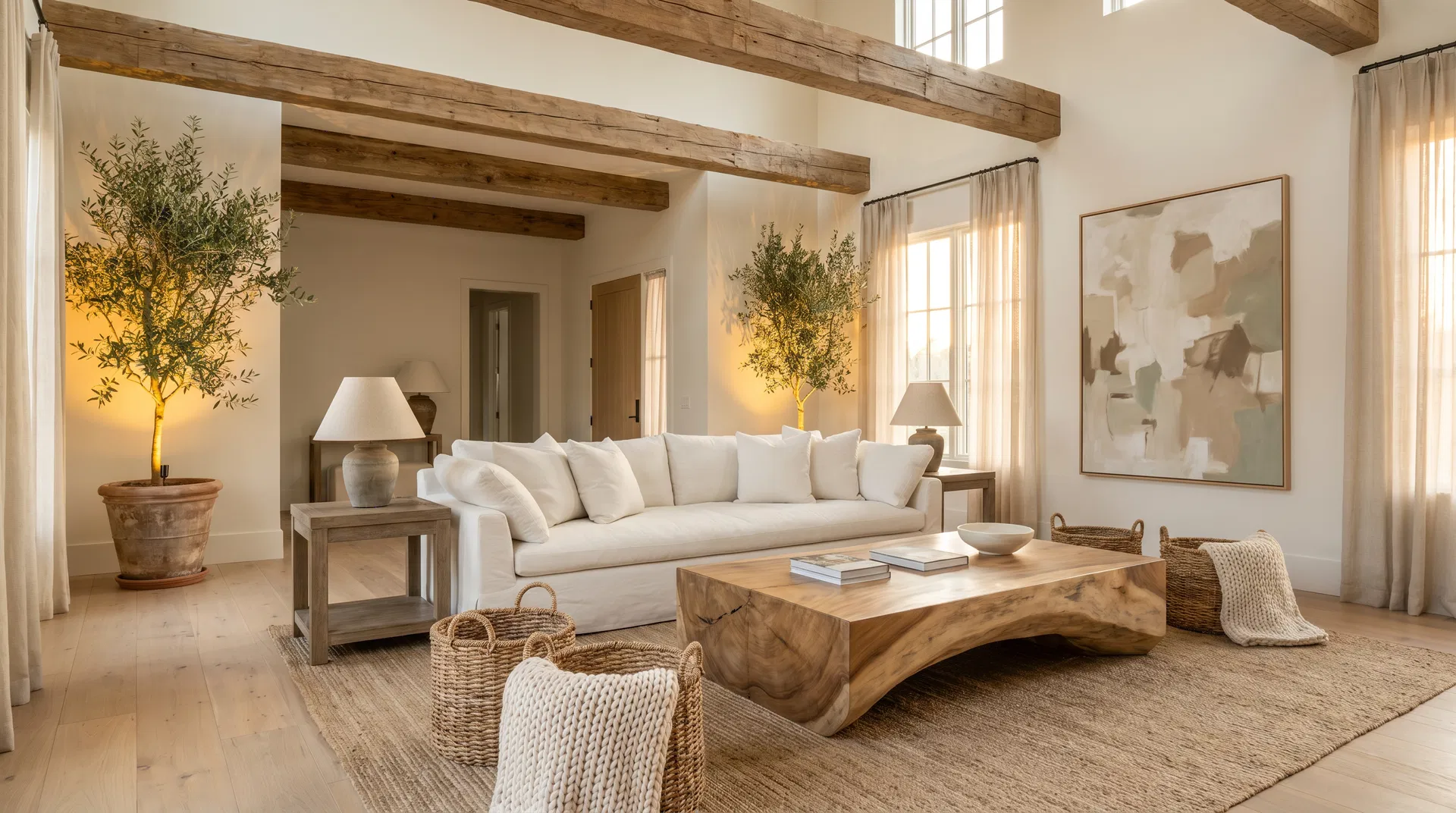
In a neutral home — which is our specialty at Driftwood Studio — texture does the heavy lifting. When your palette lives in the range of ivory to warm taupe, the visual interest has to come from somewhere. That somewhere is the interplay of rough and smooth, matte and sheen, heavy and light, woven and solid.
A Belgian linen sofa next to a reclaimed oak side table, topped with a handmade ceramic vase and a sculptural piece of driftwood — that's four different textures in one small vignette, and every single one catches the light differently.
The Layering Formula
Great texture layering follows a simple formula: start with a foundation, add a middle layer, then finish with accents. The foundation is your largest surfaces — floors, walls, and major furniture pieces. The middle layer is your textiles — rugs, curtains, throw pillows, and blankets. The accents are your objects — ceramics, wood pieces, metal fixtures, and greenery.
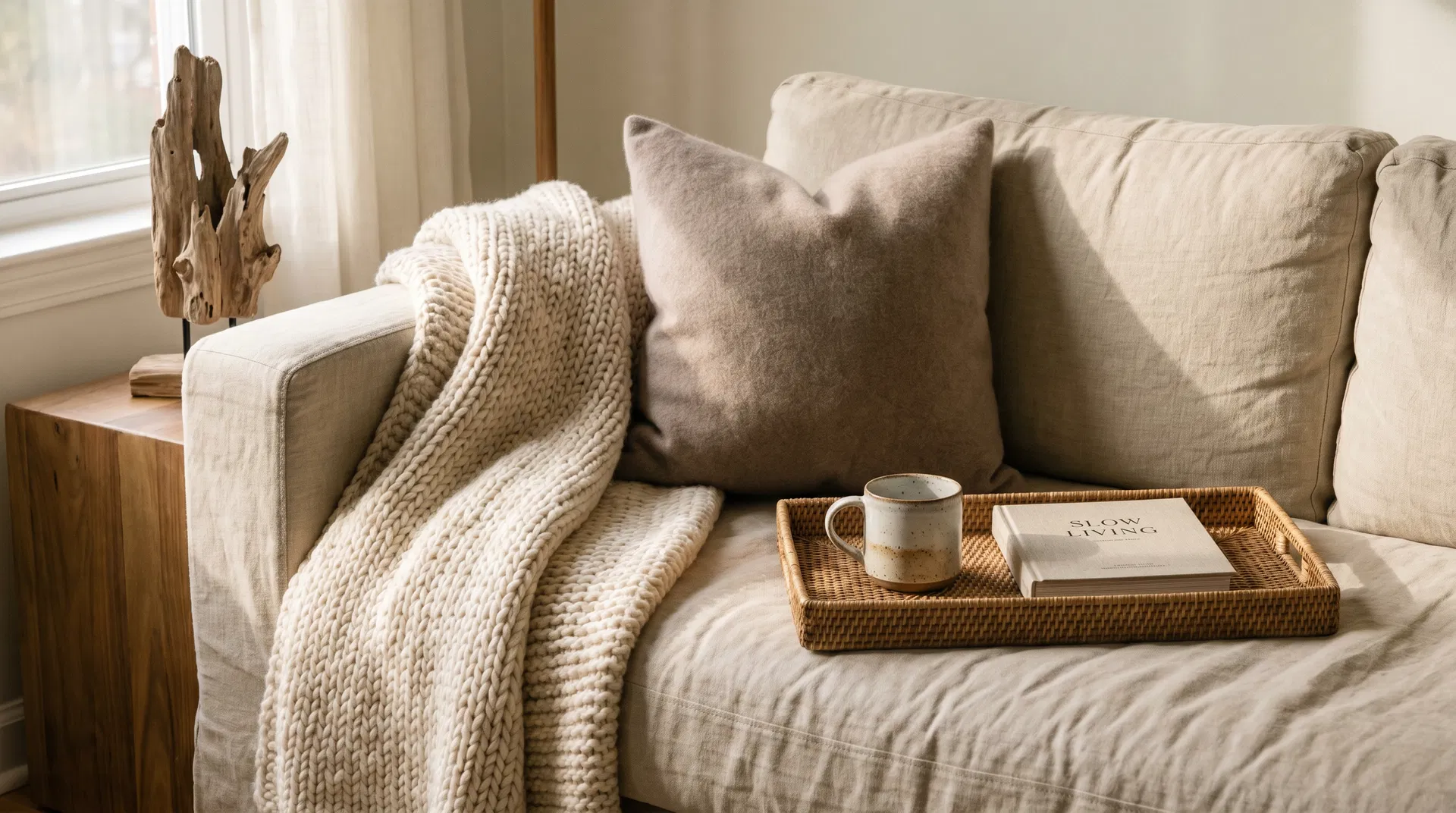
Each layer should introduce a different texture. If your sofa is smooth linen, your throw should be chunky knit. If your floors are smooth oak, your rug should be woven jute. The contrast between textures is what creates depth.
Our Favorite Texture Combinations
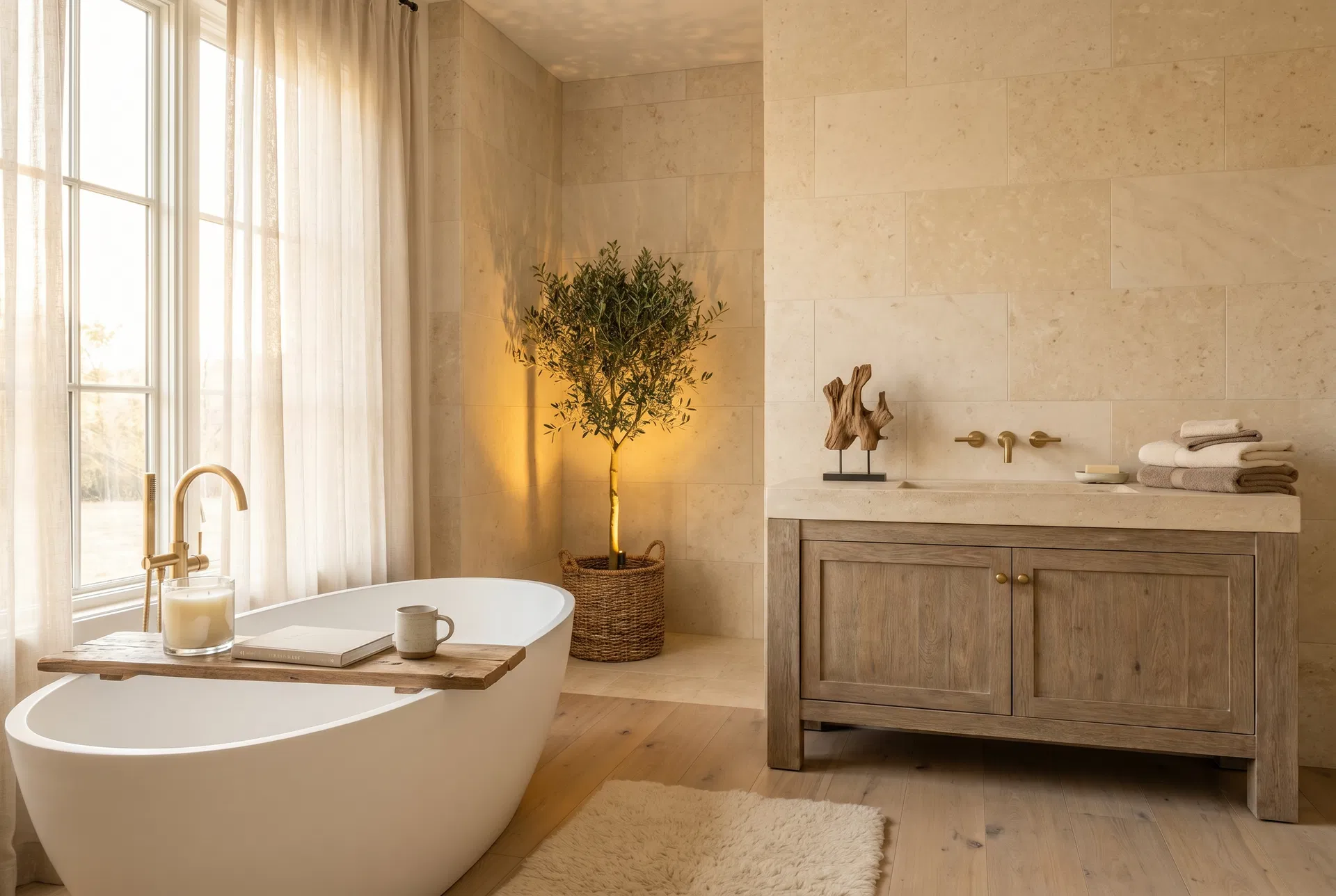
Belgian linen + chunky knit + aged brass. Honed limestone + woven rattan + matte ceramic. Reclaimed oak + cashmere + handblown glass. These combinations work because they balance rough with refined, natural with crafted, matte with subtle sheen.
The Touch Test
Here's a simple exercise: walk through your room and touch every surface. If everything feels the same — smooth, synthetic, uniform — your room needs more texture variety. A well-designed room should offer a range of tactile experiences. The cool smoothness of stone. The warmth of wood grain. The softness of linen. The roughness of woven jute. Each one adds a layer of richness that you feel even when you're not consciously touching anything.
Texture in Florida
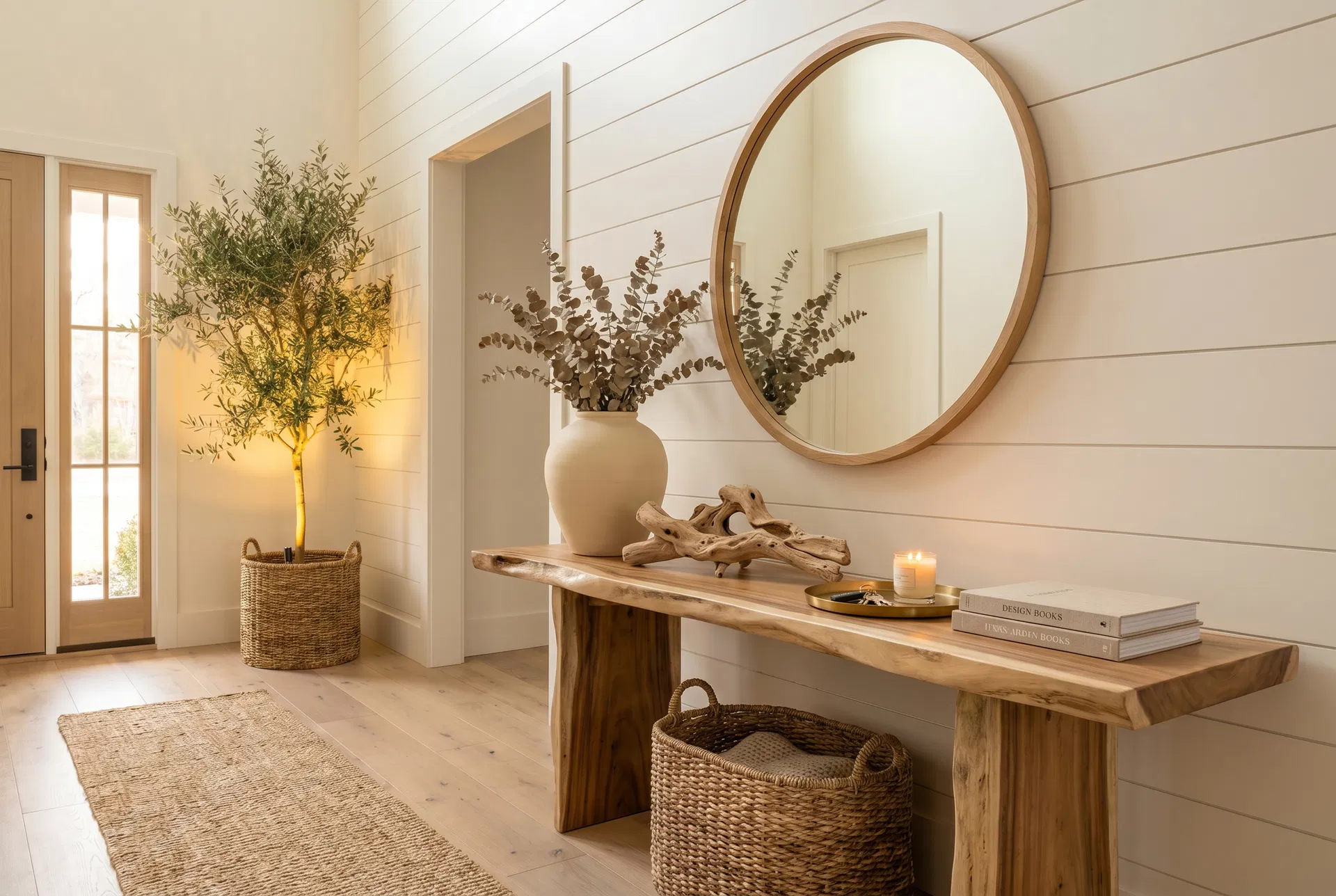
Florida's casual, indoor-outdoor lifestyle is perfectly suited to textural design. Natural materials like rattan, jute, seagrass, and driftwood feel right at home here. They connect the interior to the natural environment outside — the woven textures of palm fronds, the roughness of sand, the smooth surface of water-worn wood. When we layer these materials thoughtfully, a Florida home doesn't just look coastal — it feels it.
T
Tracy
Founder & Principal Designer, Driftwood Studio
Based in Apollo Beach, Florida, Tracy designs homes that balance timeless beauty with the way real families actually live.
texture layering interior designcozy home designwarm home textures
Ready to Transform Your Space?
Every beautiful home starts with a conversation. Let's talk about what's possible for yours.
Book a Consultation